
At 83 metres, the falls are higher than Niagara and make the easiest major nature outing from Québec City. The point is to see them from more than one level—base, bridge, or cable car—not just from the parking area.
2h Walk upGo at opening or in the last two hours before closing; summer midday is busiest.
Access and paid transport options are generally available on site, though peak-season cable-car tickets are worth buying ahead.
Pairs with: Parc de la Chute-Montmorency · Sanctuaire Sainte-Anne-de-Beaupré

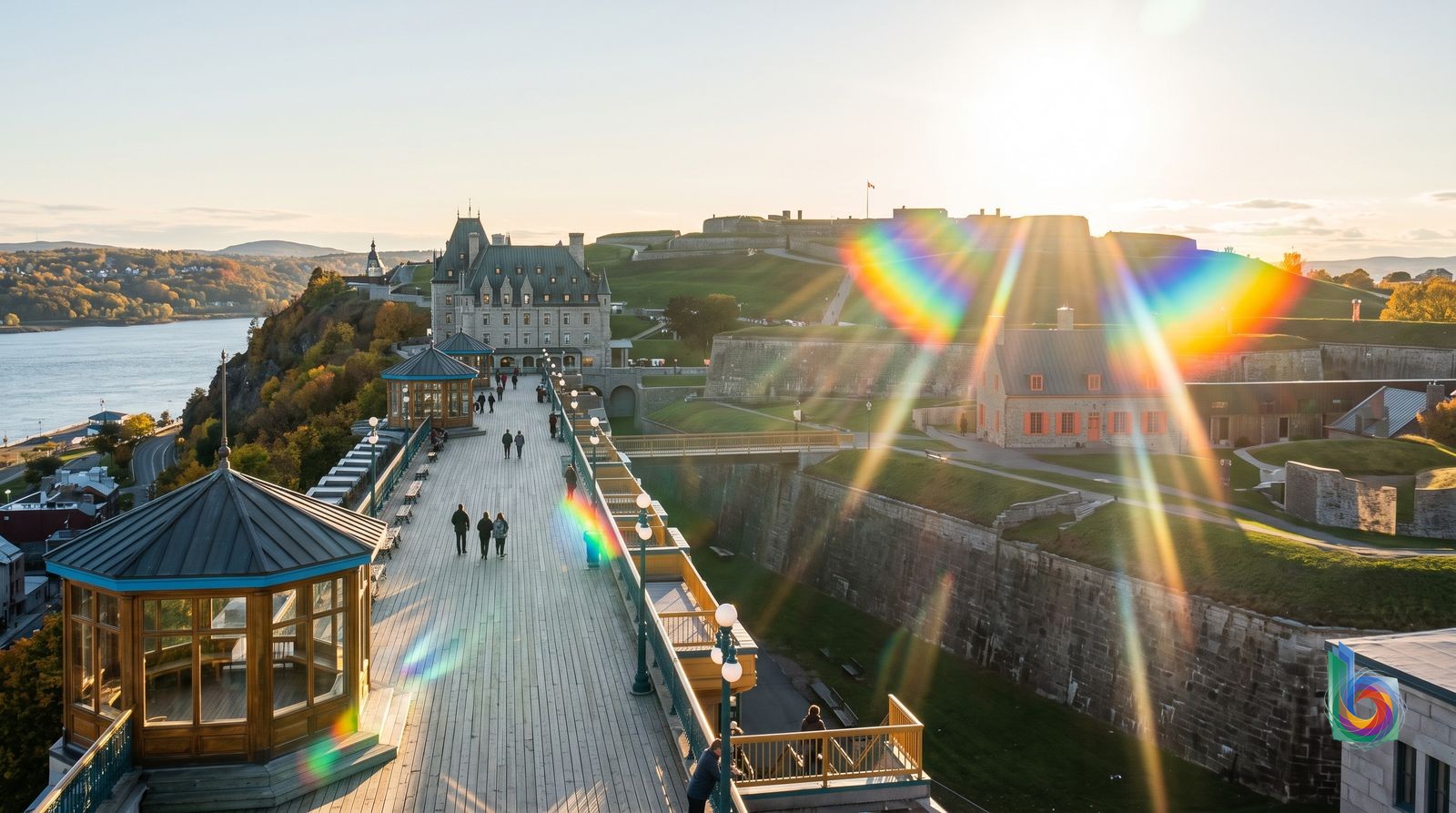
The boardwalk below Château Frontenac supplies the essential St. Lawrence panorama and a useful spine for exploring the upper town. Walk it slowly, then continue to the Citadelle or down toward Petit Champlain.
35m FreeDawn and blue hour offer the best light and far fewer people.
Pairs with: Fairmont Le Château Frontenac · Old Quebec · The Citadelle of Québec

North America's most intact walled colonial city is the region's indispensable first visit: fortifications, steep lanes, river outlooks, and French-language urban texture all converge here. Give it at least a half-day on foot, splitting upper and lower town rather than trying to rush both.
4h FreeStart around 8am, before cruise and coach groups concentrate around the main streets.
Pairs with: Fairmont Le Château Frontenac · Dufferin Terrace · Quartier Petit Champlain

The château is the visual shorthand for Québec City, best appreciated as an architectural landmark and viewpoint anchor even if you are not staying there. See its exterior from Dufferin Terrace and lower-town viewpoints; a hotel-history tour adds context for architecture enthusiasts.
30m Walk upSee it from Dufferin Terrace at sunrise or after dark, when the façade is illuminated.
The exterior and public areas are accessible without a ticket; book a guided history tour ahead in peak season if desired.
Pairs with: Dufferin Terrace · Old Quebec · Quartier Petit Champlain

This deep glacial valley is the most rewarding major wilderness escape near Québec City, with hikes, canoeing, autumn color, and a genuine sense of scale. It deserves a full day or overnight rather than being squeezed into a city itinerary.
6h Book aheadArrive at park opening, especially on September and early-October weekends.
Reserve accommodation, popular equipment rentals, and guided activities well ahead for summer and fall-color weekends; park entry can otherwise be bought online or on arrival.
Pairs with: Montmorency Falls · Parc de la Chute-Montmorency

For mountain-scale Québec, this is the essential Gaspésie park: high alpine terrain, serious hiking, moose habitat, and the chance to see caribou. Plan it as a multi-day road-trip stop, with a hike matched honestly to weather and fitness.
8h Book aheadStart hikes at dawn, both for parking and the clearest mountain weather.
Reserve campsites, cabins, and peak-season accommodation months ahead; day entry is easier but should be purchased online when possible.
Pairs with: Forillon National Park of Canada · Percé Rock

The pierced sea stack is Québec's iconic coastal landmark and the visual climax of a Gaspésie road trip. View it from the village and waterfront, then take a boat trip or visit nearby Bonaventure Island if conditions and time allow.
1.5h FreeSee it at sunrise or near sunset; boat excursions are typically calmer early in the day.
Pairs with: Forillon National Park of Canada · Parc national de la Gaspésie

Forillon combines headland hikes, sea cliffs, beaches, wildlife, and preserved fishing-settlement history at the tip of the Gaspé Peninsula. Prioritize the Cap Gaspé sector for the signature coastal experience and allow a full day if possible.
7h Walk upHike Cap Gaspé early for parking, wildlife, and less wind-exposed trail traffic.
Entry is easy, but reserve campgrounds and popular Parks Canada accommodations well ahead for July and August.
Pairs with: Percé Rock · Parc national de la Gaspésie

This compact, steep cobbled quarter is Old Québec at its most photogenic, with independent shops and the lower-town atmosphere visitors come for. Use it as a wandering route between Place Royale and the funicular rather than a destination that needs a long separate visit.
45m FreeGo before 10am or after dinner, especially in summer and during the holiday season.
Pairs with: Place Royale · Funiculaire du Vieux-Québec · Notre-Dame-des-Victoires Catholic Church

Québec City's strongest general museum puts the province's Indigenous, social, and global history in accessible, well-designed exhibitions. It is the best indoor counterweight to an Old Québec sightseeing day, particularly in rain or winter.
2h Walk upWeekday mornings are quietest; allow extra time for major temporary exhibitions.
Buying online can save time on busy summer weekends, but same-day entry is usually practical.
Pairs with: Place Royale · Quartier Petit Champlain · Notre-Dame-des-Victoires Catholic Church

This is the park infrastructure around Montmorency Falls: trails, suspension bridge, cable car access, and viewpoints from both sides of the gorge. Come for a fuller outdoor half-day rather than treating the falls as a quick roadside photo stop.
2.5h Walk upArrive near opening or visit late afternoon; midday tour-bus traffic is heaviest.
Park access is straightforward, but reserve the cable car online in peak summer if it is central to your visit.
Pairs with: Montmorency Falls · Sanctuaire Sainte-Anne-de-Beaupré

The battlefield where British and French forces fought in 1759 is now Québec City's grand urban park, with river views and enough historical context to make a casual walk meaningful. Walk it between the Musée national des beaux-arts and the fortifications rather than trying to see every acre.
1.3h FreeEarly morning is best for a quiet walk; it is particularly pleasant around sunset.
Pairs with: Musée national des beaux-arts du Québec · The Citadelle of Québec · Parliament Building

This active fortress is one of the clearest expressions of Québec City's strategic, walled identity, and the guided visit explains the site better than exterior views alone. Combine it with the Plains and Dufferin Terrace for the city's strongest historic-and-scenic circuit.
1.5h Timed entryBook the first tour of the day for smaller groups and better rampart views.
Guided-tour places are limited; reserve online for summer dates and days when ceremonial programming is scheduled.
Pairs with: Plains of Abraham · Dufferin Terrace · Old Quebec

The cathedral anchors the historic upper town and carries unusually deep institutional history, including the Holy Door opened for pilgrimage. It is a short but worthwhile interior stop while walking the fortifications and Old Québec streets.
30m FreeVisit outside Mass times and before late-morning tour groups arrive.
Pairs with: Old Quebec · Dufferin Terrace · The Citadelle of Québec

This small square is a core piece of the colony's early commercial landscape, framed by some of the most recognizable stone buildings in the city. It is best treated as a stopping point within a lower-town walk, not a standalone excursion.
25m FreePhotograph it early, before the square fills with walking tours.
Pairs with: Quartier Petit Champlain · Notre-Dame-des-Victoires Catholic Church · Museum of Civilization

The province's leading art museum is especially valuable for Québec art, from historic painting to modern and contemporary work. Give it a focused two-hour visit, then use the Plains of Abraham immediately outside for a change of pace.
2h Walk upWeekday afternoon is often calmer than the opening rush on rainy days.
Online tickets are sensible for blockbuster exhibitions, but regular collection entry is usually manageable same day.
Pairs with: Plains of Abraham · Parliament Building · The Citadelle of Québec

This major pilgrimage basilica is worth the detour for its richly worked interior, stained glass, and role in French-Canadian Catholic life. It works naturally as the second stop after Montmorency Falls on a drive east of Québec City.
1h FreeAvoid Sunday service periods if you want to sightsee quietly.
Pairs with: Montmorency Falls · Parc de la Chute-Montmorency

Québec's oldest provincial park is a strong Laurentians nature choice for lakes, paddling, swimming, and moderate hikes, away from the resort-centric side of Tremblant. It is especially useful for Montréal-area visitors wanting a real park day rather than a village outing.
6h Book aheadArrive at opening on summer weekends and during the autumn-color season.
Book campsites, cabins, and equipment rentals well ahead for summer weekends and fall foliage; daily access is simpler.
Pairs with: Parc de la Gatineau

This large conservation park just outside Ottawa-Gatineau offers the region's most accessible blend of forest hikes, lakes, lookouts, and cycling roads. It is a strong day trip, especially in autumn, but needs less time than Québec's destination national parks.
4h FreeGo on a weekday or early morning in fall, when trailheads and scenic parkways become congested.
Pairs with: Parc national du Mont-Tremblant

This short inclined railway is more useful than essential: it saves a steep climb between Dufferin Terrace and Petit Champlain, with good views on the way. Ride it one direction and walk the other so it becomes part of a lower-town circuit rather than a queue for its own sake.
15m Walk upUse it before 10am or after 6pm to avoid its longest queues.
Buy at the station; lines can be lengthy in summer, when walking the stairs is often faster.
Pairs with: Quartier Petit Champlain · Dufferin Terrace · Place Royale

The grand Second Empire legislature is a worthwhile exterior stop at the edge of Old Québec, particularly for its statues and formal setting. Take a guided interior tour if provincial politics or architecture interests you; otherwise pair a brief look with the museum and Plains.
45m Timed entryWeekday morning exterior views are easiest before government activity and tour groups build.
Free guided tours require a reserved time slot and can be limited when the legislature is sitting.
Pairs with: Plains of Abraham · Musée national des beaux-arts du Québec · Old Quebec

The ice hotel is an imaginative winter-only spectacle, rebuilt each season with a new design and best experienced as part of a cold-weather Québec trip. It is not a reason to visit in summer, and an overnight is a splurge rather than the only way to see it.
1.3h Book aheadWeekday daytime visits have lighter crowds than Saturday evenings.
Buy a daytime visit in advance for winter weekends and holiday periods; overnight rooms often sell out much earlier.
Pairs with: Old Quebec · Dufferin Terrace

Facing Place Royale, this small church is one of the oldest stone churches in North America and gives the square its historical gravity. It is a brief interior stop, but a meaningful one when paired with the surrounding lower town.
15m FreeDrop in early in the day, outside service times.
Pairs with: Place Royale · Quartier Petit Champlain · Museum of Civilization

This short, old-fashioned slide is a memorable winter tradition with an unusually good river view, but it is seasonal and not a core sightseeing priority. Use it as a fun add-on after walking Dufferin Terrace, especially with children or a playful group.
30m Walk upWeekday daytime is easiest; go near opening on winter weekends.
It operates only when conditions permit; tickets are bought on site and weekend lines are common.
Pairs with: Dufferin Terrace · Fairmont Le Château Frontenac · Old Quebec

This is a solid family-oriented aquarium with marine mammals and indoor exhibits, but it is not a defining Québec experience for most adults on a short first trip. Choose it for children, bad weather, or a particular interest in aquatic life rather than over Old Québec or the falls.
2.5h Timed entryOpening time is best, especially during school breaks.
Reserve online for school holidays, summer weekends, and rainy days; otherwise same-day availability is common.
Pairs with: Parc de la Chute-Montmorency