Season by season
January–March
Mild by northern-European standards, but wetter, quieter and with less dependable beach weather. This is a city-break season rather than a seaside one.
Rain and wind can blunt the seafront appeal, some seasonal businesses are quieter, and beach plans are unrealistic.
April–June
The best all-round window: comfortable walking temperatures, active restaurants and long, useful daylight before the full beach-season crush.
May 6–8 is an exception: Festa di San Nicola brings pilgrims, crowds and disruption around the old town; book accommodation well ahead.
July–August
Peak summer: hot, busy and lively, with 40°C-plus days possible in Puglia. Seaside areas are at their most crowded.
Heat makes midday sightseeing unpleasant, visitor numbers and accommodation demand peak, and calm streets are not on offer.
September–October
Another smart shoulder season, usually with good walking weather, an active dining scene and fewer beach-season crowds than high summer.
September's Fiera del Levante can push up accommodation demand and worsen traffic; book around it rather than assuming shoulder-season availability.
November–December
Quieter and generally mild enough for an urban break, but wetter and increasingly unreliable for beach-oriented plans.
Shorter days and rain are the compromise. Around December 6, the San Nicola observance brings a noticeable crowd surge.
Events worth planning around
Festa di San Nicola · May 6–8
Bari's major St Nicholas celebration fills the old town with pilgrims, events and fireworks. Expect crowded streets and abnormal hotel availability; reserve lodging well in advance and do not plan on a calm Bari Vecchia experience.
San Nicola observance · December 6
The December feast day also draws crowds around the Basilica di San Nicola and the old town. It is a good time for pilgrimage atmosphere, but not for a quiet central stay.
Fiera del Levante · Usually September
This major fair can distort accommodation demand and traffic in Bari. Check its dates before fixing September lodging, especially if arriving by car or relying on taxis.
Getting around
Walking
Nearly all first-time sightseeing: Bari Vecchia, Murat and Umbertino form a compact, flat core. Walk between the Basilica di San Nicola, cathedral, Castello Svevo, Piazza del Ferrarese, Teatro Petruzzelli and the Lungomare; it is usually faster than decoding a bus route.
Treat Bari Centrale as the southern edge of the walkable centre. From there, Murat begins immediately; Bari Vecchia is roughly 15–20 minutes via Corso Vittorio Emanuele II. Wear proper shoes for old-town paving and leave generous time if your hotel is deep in the lanes.
Bari is flat—hills are not the problem—but Bari Vecchia’s cobbles, narrow lanes and crowds make wheeled luggage, strollers and door-to-door taxis awkward. Walking stops being effortless in Pane e Pomodoro/Japigia, Marconi/Fiera del Levante, Poggiofranco and the farther reaches of Libertà or San Pasquale/Carrassi; use a bus or taxi there, especially after dark.
AMTAB bus
Filling the gaps beyond the central core: reaching Pane e Pomodoro/Japigia, Madonnella from the station, outer Libertà, San Pasquale/Carrassi, Poggiofranco and the Marconi/Fiera del Levante area without paying for taxis.
Buy and validate a ticket before boarding where required. Tickets are about €1 in advance and around €1.50 on board; carry some cash as well as a contactless card. Use buses as a point-to-point tool, not as the backbone of a sightseeing day.
Routes are less intuitive than walking, and they are not a convincing late-night substitute for a taxi. In Bari Vecchia and central Murat, a bus is often slower than going on foot; do not expect one to thread the old town’s lanes.
Taxi
Late arrivals, luggage, rainy or very hot days, and trips where the centre is genuinely too far to walk—especially Poggiofranco, Marconi/Fiera del Levante, Japigia and a hotel well beyond the station-side edge of San Pasquale/Carrassi or Libertà.
Use licensed taxis for a direct trip rather than relying on rideshare. They also make sense from Bari Centrale to an address deep in Bari Vecchia, where the final approach on foot can be cumbersome.
Taxis are poor value for routine central sightseeing: Murat, Umbertino, Madonnella’s western side and Bari Vecchia are fundamentally walkable. Traffic and restricted old-town access mean a cab may still leave you a short walk from your door; rideshare should not be assumed as a backup.
Rental car and Park & Ride
Exploring wider Puglia, carrying family gear, or staying in car-friendlier inland areas such as Poggiofranco. For a beach day at Pane e Pomodoro, the Pane e Pomodoro Park & Ride is the sensible city-side option.
Keep the car out of the historic core and use a Park & Ride lot or accommodation with confirmed parking. Read signs closely: blue-zone parking is generally paid Monday–Saturday, 08:30–20:30, though some marked areas charge around the clock.
Do not drive into Bari Vecchia or the central streets of Murat unless you have a specific reason. Narrow lanes, restricted-access/ZTL-style enforcement, scarce paid parking and traffic make a rental car a liability there; fines can erase any convenience.
Metro / urban rail
It is not a useful visitor mode within Bari. Use Bari Centrale for regional and long-distance trains instead—excellent for day trips, but not for moving between the main sightseeing districts.
Think of rail as an arrival and excursion tool. For Matera, go to the separate Ferrovie Appulo Lucane building just left of Piazza Aldo Moro when facing out from Bari Centrale, rather than assuming all regional services use the main concourse.
There is no practical urban metro network connecting Bari Vecchia, Murat, Madonnella or Pane e Pomodoro. Do not choose a hotel in Poggiofranco, Japigia or Marconi/Fiera del Levante on the assumption that rail will make the central sights effortless.
Safety: Bari is generally manageable on foot, but keep your phone and wallet secure in Bari Vecchia’s crowded lanes and around Piazza del Ferrarese at night, and avoid driving into the old town’s restricted, narrow streets.
Book before you land
Teatro Petruzzelli — book ahead for a specific opera, ballet, concert or major performance; this is Bari’s one regular cultural venue where desirable dates can genuinely go. There is no Rome-style list of Bari monuments that routinely sells out: Basilica di San Nicola and the cathedral are principally free visits, and the castle is normally a buy-on-arrival proposition. Check current opening times rather than pre-buying speculative tickets.
- Carry a contactless card and some cash. Small food counters, bars and buses can still be easier with cash, and AMTAB bus tickets cost more if bought on board.
- Bari Vecchia is for wandering, but keep phone and wallet secure in its narrow, crowded lanes—especially around nightlife streets and Piazza del Ferrarese. Late-night drunkenness is more common than serious violence.
- Dress and behave as if entering a functioning church, not an attraction. The Basilica di San Nicola is an important pilgrimage church, and many smaller Bari Vecchia churches are closed except for services or feast days; do not build an itinerary around gaining access to all of them.
- Eat and drink on Bari time: an evening passggiata along the seafront and through the old town starts late. Restaurants and bars become livelier after dusk, while midday is for a slower pace and shade.
- Validate or buy public-transport tickets correctly before boarding where required, and do not assume a tourist pass exists or is worthwhile. For the central sights, walking is usually faster.
- If arriving by car, read parking signs closely: blue-zone parking is generally paid Monday–Saturday, 08:30–20:30, while some marked areas charge around the clock.
Worth leaving the city for
Polignano a Mare and MonopoliFull day; roughly 35–45 minutes by regional train from Bari Centrale to each town, plus walking between sights.
The strongest easy rail escape: Polignano has the cliff-framed Adriatic drama Bari lacks, while Monopoli is the more satisfying place to linger—working harbour, old lanes and a less stage-set feel. Do both rather than giving Polignano an entire day; its centre is small and can be oppressively crowded in summer.
MateraLong full day; allow about 1.5–2 hours each way from Bari Centrale area, including getting to the separate FAL station and the walk into the Sassi.
This is the one genuinely different-world option: the cave districts of the Sassi are far more extraordinary than another lap of Bari Vecchia. It is a long, hilly day and deserves an overnight if your schedule permits, but it still beats padding a three-day Bari stay.
TraniHalf day to relaxed full day; about 45–60 minutes each way by direct regional train from Bari Centrale, then a short walk to the harbour.
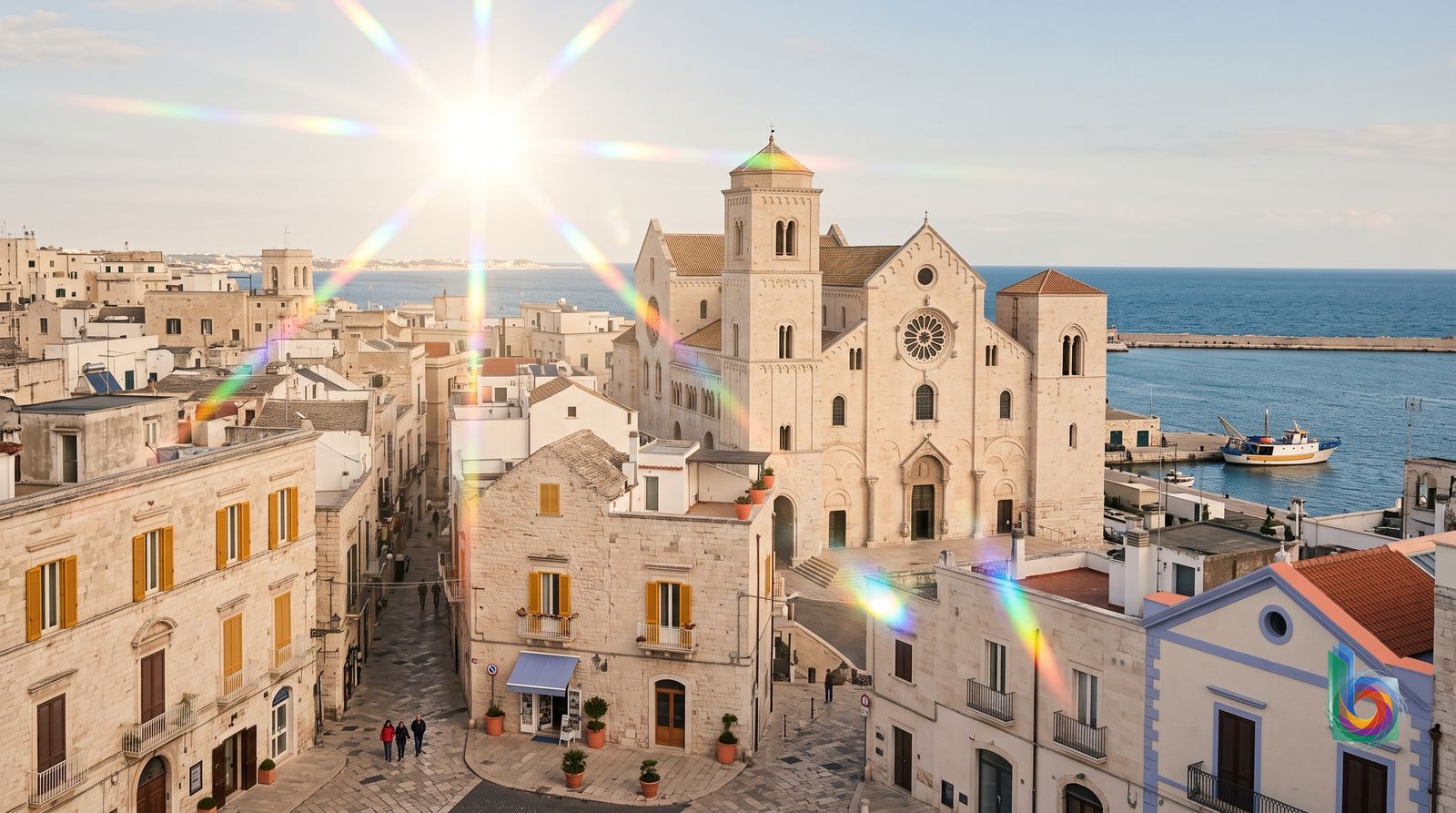
Go for the cathedral: its pale stone mass directly beside the water is among Apulia’s great images, and Trani’s compact harbour town feels calmer and more polished than Bari. It is a better choice than a generic beach-side suburb when you want architecture and an unhurried lunch.
AlberobelloFull day; typically around 1.5–2 hours each way on Ferrovie del Sud Est services from Bari Centrale, with schedules worth checking closely.
The trulli are unique enough to justify the trip once, even if the core is heavily touristed and can feel like an open-air souvenir district. Go early, walk beyond the main clusters, and do not mistake it for an all-day city; combine it with a slower Valle d’Itria stop only if transport timings cooperate.
OstuniFull day; about 1 hour by train from Bari Centrale, then allow extra time for the station-to-centre transfer.
For a proper white hill town, Ostuni has the visual payoff Bari cannot offer: a dense, dazzling old centre above olive-country views. The catch is logistical—the railway station sits below town—so it is worth it only if you are willing to connect onward by local bus or taxi rather than treating the train arrival as the destination.